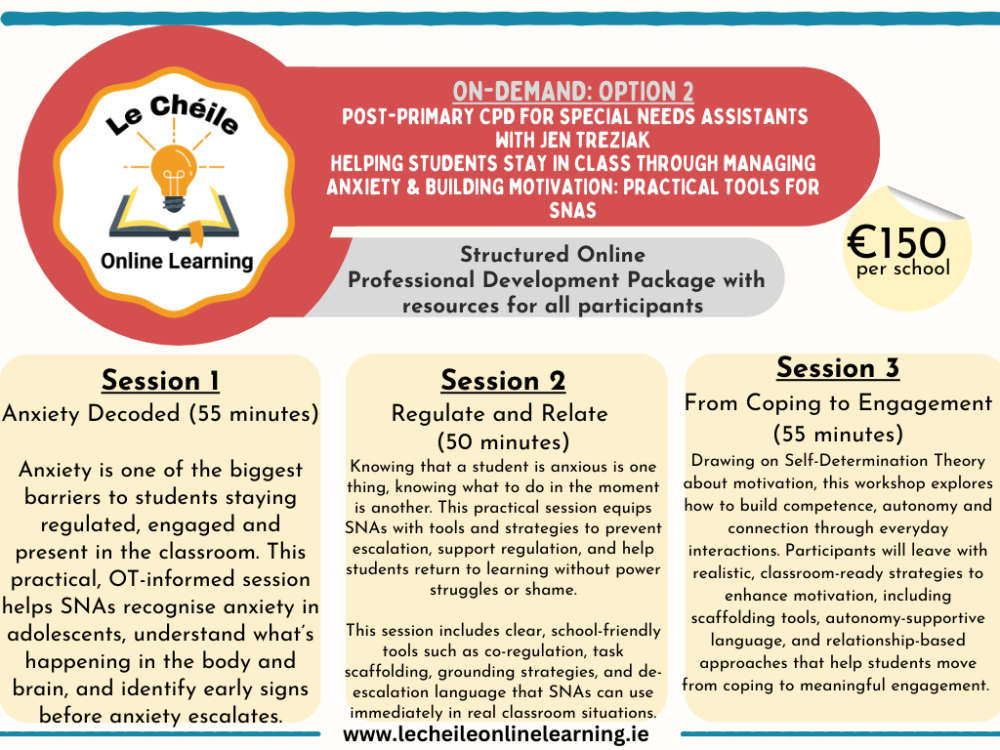
3 hours self directed content. The SNAs can go through this material as a group or in their own time.This can be used for Croke Park hours, school closure day or whenever your school wants CPD for SNAs. Please share the link with them after purchasing. There is a certificate of attendance included which needs to be printed and signed on completion of the material.
Helping Students Stay in Class Through Managing Anxiety & Building Motivation: Practical Tools for SNAs
Session 1 - Anxiety Decoded - 55 minutes
Anxiety is one of the biggest barriers to students staying regulated, engaged and present in the classroom. This practical, OT-informed session helps SNAs recognise anxiety in adolescents, understand what’s happening in the body and brain, and identify early signs before anxiety escalates.
Learning Outcomes
By the end of this session, SNAs will be able to:
- Describe anxiety as a normal nervous system safety response (fight/flight/freeze)
- Recognise common presentations of anxiety across post-primary settings
- Identify early warning signs and common classroom triggers
- Understand how anxiety impacts attention, memory and task initiation
- Explain why avoidance temporarily reduces anxiety but strengthens it over time
Session 2 - Regulate and Relate - 50 minutes
Knowing that a student is anxious is one thing, knowing what to do in the moment is another. This practical session equips SNAs with tools and strategies to prevent escalation, support regulation, and help students return to learning without power struggles or shame.
This session includes clear, school-friendly tools such as co-regulation, task scaffolding, grounding strategies, and de-escalation language that SNAs can use immediately in real classroom situations.
Learning outcomes
By the end of this session, participants will be able to:
- Use proactive strategies to reduce anxiety and improve predictability in the school day
- Apply co-regulation techniques using tone, body language and low-demand support
- Use “in-the-moment” scripts that reduce escalation and support coping
- Respond effectively when anxiety presents as refusal, anger or shutdown
- Support short resets and calm re-entry back into classroom learning
- Promote student self-awareness and coping
- Recognise when to seek additional support
Session 3 - From Coping to Engagement - 55 minutes
Drawing on Self-Determination Theory about motivation, this workshop explores how to build competence, autonomy and connection through everyday interactions. Participants will leave with realistic, classroom-ready strategies to enhance motivation, including scaffolding tools, autonomy-supportive language, and relationship-based approaches that help students move from coping to meaningful engagement.
Learning outcomes
By the end of this session, participants will be able to:
- Explain key motivation concepts and recognise common myths that can reduce student engagement.
- Describe Self-Determination Theory and how competence, autonomy, and relatedness influence intrinsic motivation in school.
- Use practical strategies to build competence, including scaffolding tasks, chunking, modelling, and focusing feedback on effort and process.
- Apply autonomy-supportive communication, including invitational language, meaningful choices, and third-person rule statements when choice isn’t possible.
- Balance guidance and independence to avoid over-controlling or under-supporting students in learning situations.
- Strengthen relatedness through empathy and connection, using validation and non-judgemental responses to support anxious or discouraged students.
Presenter Bio: Jen Trzeciak

Jen Trzeciak is a highly experienced, Coru registered Occupational Therapist specialising in mental health. With over 25 years of service in the NHS, private, and third sector organisations, Jen has developed a rich background in delivering tailored mental health interventions and facilitating mental health awareness workshops and training programs.
In 2021, Jen founded Way Ahead Therapy to offer flexible, personalised support and training solutions for individuals and organisations alike. She works one-to-one with teenagers and adults facing challenges related to anxiety, depression, ADHD, autism, stress, and low self-esteem. In addition to her clinical work, Jen delivers mental health training in schools and community settings, empowering others with the knowledge and tools to improve well-being and foster resilience.